
USAID ARH Project Drives Significant Progress in Rautahat
 cnepal
In a district-level stakeholder review and reflection meeting held in Gaur today, the USAID-funded Adolescent Reproductive Health (ARH) Project was lauded for its pivotal role in improving the health sector across Rautahat.
The project, implemented by Campaign Nepal in collaboration with CARE, Jhpiego, Nepal CRS and other consortium partners, has become a key initiative in advancing adolescent health and education in the district.
“A Crucial Initiative”
Speaking at the meeting, District Coordination Committee (DCC) Chairperson Ram Ayodhya Yadav underscored the project’s significance. Yadav’s remarks highlighted the project’s role in empowering youth through reproductive health education and access to essential services.

Acknowledging the project’s contributions to healthcare reform in the district, Yadav said:
The USAID Adolescent Reproductive Health Program has played a crucial role in improving health outcomes in our municipalities. It’s fully effective, and we need to continue pushing it forward.
His remarks came as local officials highlighted tangible improvements at several health facilities.
Under the USAID ARH program, which is being implemented in Madhav Narayan, Gadhimai, Brindavan, Gaur, Fatuwa Bijaypur, Katahariya, Dewahi Gonahi, and Garuda municipalities, the two health posts in Gadhimai Municipality – Dharampur and Samanpur – have reached over 80% compliance with national healthcare standards, a notable achievement in a district often hampered by inadequate infrastructure and resources.
While this progress is encouraging, Yadav and other officials pointed to the need for similar improvements in other municipalities, where health services are still struggling to meet the required standards.
Sustained Support and Progress
Mahesh Sah, head of the District Public Health Office, emphasized that Campaign Nepal’s ongoing support and monitoring efforts have been vital in ensuring health facilities meet the required standards.

He noted:
Without the continuous backing of Campaign Nepal, it would have been challenging for health posts to achieve and maintain these high levels of compliance.
However, challenges remain. Several health posts in the municipalities like Madhav Narayan, Gaur, and Dewahi Gonahi, still face hurdles in meeting compliance. The ongoing efforts of the ARH project, including training and capacity building, are expected to help bridge these gaps, but local health authorities recognise that more work is needed to sustain and expand these successes.
Addressing Shortcomings, Strengthening Inclusivity
The review also addressed the challenges faced by the project. Shatrudhan Singh, Executive Director of Campaign Nepal, spoke openly about the issues the project has faced. Singh acknowledged recent shortfalls in service delivery but reassured attendees that the project remains committed to inclusivity and reaching all corners of the community.
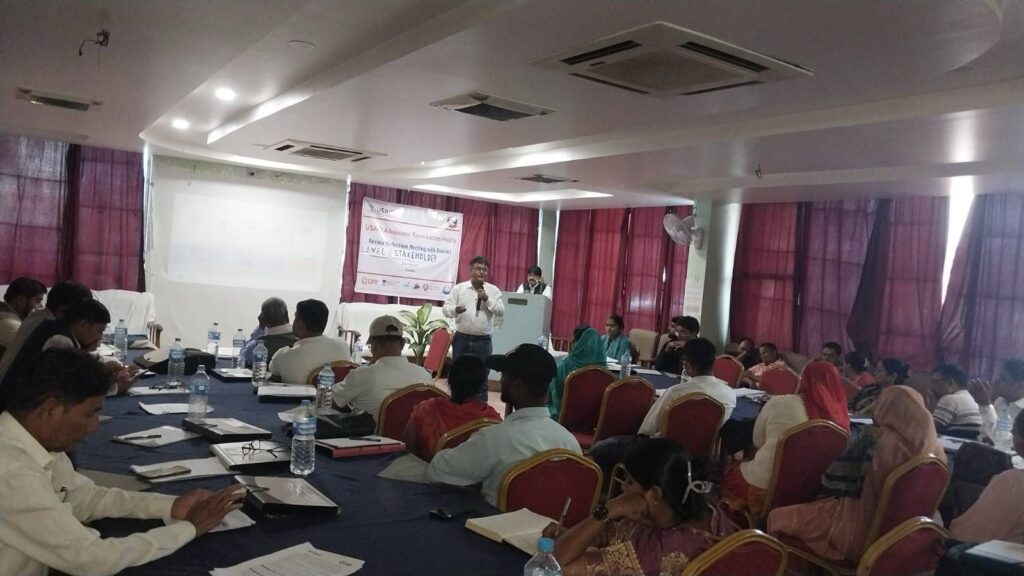
Responding to participants’ questions during the meeting, Singh said:
We are committed to addressing the issues we’ve encountered and moving forward more inclusively, ensuring that no community is left behind.
Local Leadership, International Support Driving Success
The review meeting saw an active participation from a wide range of stakeholders, including mayors, deputy mayors, and health officials from across Rautahat’s eight municipalities.
Suzanne Marleen Reier, Chief of Party for the USAID ARH project, praised the strong and high level of engagement from local leaders, calling it crucial to the programme’s long-term success.

“The commitment we see here today reflects the shared belief in the potential of this programme to create lasting change,” she said.
This kind of participation is exactly what’s needed to drive sustained progress. The success of this meeting reflects the shared commitment of all involved.
Suzanne Marleen Reier, Chief of Party for the USAID ARH project
Representatives from Jhpiego and Nepal CRS, consortium partners playing key roles in the program’s implementation, were also present. Jhpiego has been instrumental in maintaining quality assurance standards, while Nepal CRS has led efforts to engage the private sector in supporting adolescent health services.

The meeting brought together mayors, deputy mayors, chief administrative officers, and health branch heads from the eight municipalities covered by the project. Bidur Bastola, Director of Monitoring and Evaluation for the USAID ARH project, and Vijay Kumar Jha, Provincial Project Coordinator, also attended, lending further weight to the discussions.
Looking to the Future
As the ARH project continues to evolve, local officials remain optimistic about its potential to reshape adolescent healthcare in the district. As discussions concluded in Gaur, the sentiment was clear: the USAID ARH project has made a substantial difference, but there is still a long road ahead. Stakeholders left the meeting with a renewed sense of purpose, committed to continuing the work that has already transformed the lives of so many.
For now, the ARH project stands as a beacon of what can be achieved when local determination meets international support.
Chief of Party Reier said:
We still have work to do, but the progress we’ve made so far gives us hope for the future.
As Campaign Nepal and the partners continue to collaborate with local governments and communities, the project remains a beacon of hope for adolescents, particularly girls, in Rautahat’s diverse municipalities. The adolescents, once marginalized by the limitations of local healthcare systems in the district, are now finding a brighter path forward.