SMC Networks Drive Draft of Local Education Policy
 cnepal
In April 2024, something remarkable started to unfold in the municipalities of Paroha, Madhav Narayan, and Durga Bhagwati. Campaign Nepal, with support from USAID’s Civil Society: Mutual Accountability Project (CSM) and The Asia Foundation, launched a groundbreaking project titled “Sustainable Accessibility, Quality, and Governance in Education through Community Engagement.” The goal was to address the long-standing issues that plagued these communities’ education systems—high dropout rates, a lack of School Management Committees (SMCs), and little to no community involvement in shaping the future of their schools.
Baijnath Ray Yadav, the Mayor of Madhav Narayan Municipality says:
There were no real policies or mechanisms to support education in our municipality. We needed something concrete, something that brought everyone together to tackle these problems head-on.
Step One: Building the Foundation with SMCs and PTAs
The first move was to encourage schools across all three municipalities to form SMCs and Parent-Teacher Associations (PTAs). These committees would serve as the backbone for school-level governance and accountability.
But Campaign Nepal didn’t stop there. They helped create a comprehensive SMC Network—a platform where individual committees from different schools could collaborate, share best practices, and work together toward common goals.
Sarita Das, SMC chairperson of Nayan Kamakshya Basic School, explains:
We wanted to ensure that these SMCs weren’t just isolated units. Through this network, we can learn from each other and build something sustainable.
Step Two: Empowering the Network
Creating a network is one thing—making it effective is another. To guide the SMC Network’s functions, Campaign Nepal developed a detailed Terms of Reference (TOR), ensuring that every member understood their responsibilities. Regular bi-monthly meetings were organized to keep up the momentum, where members gathered to share insights and challenges.
Sarita adds:
We analyzed the educational landscape of our municipality using SWOT analysis during training sessions. It was eye-opening. We found gaps in quality, infrastructure, and governance.
Through a series of tailored training sessions, the network members were empowered to take control of their educational futures. They learned to critically evaluate their municipalities’ educational systems and pinpoint where improvements were needed.
Step Three: Drafting the Community-Led Education Policy
With their newfound knowledge, the SMC Network dove into drafting an education policy. Participants were introduced to the relevant constitutional provisions, laws, and policies of Nepal’s education sector. They examined their own municipalities’ unique challenges—everything from teacher shortages to the lack of proper school facilities—and started shaping a policy that would work for them.
Mayor Yadav acknowledges:
Education policies, acts, and laws are missing in our system. But this draft, which was created with full community involvement, is going to change that. It’s a policy we can all stand behind.
The policy drafting was a deeply participatory process, involving not just the SMC Network but the entire community. Consultations were held with local government officials, parents, teachers, women, youth, children, and marginalized groups. Their feedback was essential in refining the policy to ensure it was inclusive and actionable.
Step Four: Refining the Draft
With the community’s input, the draft education policy started to take shape. Mrs. Das during a community consultation meeting shares:
The feedback from parents and teachers was crucial. They know the real challenges on the ground.
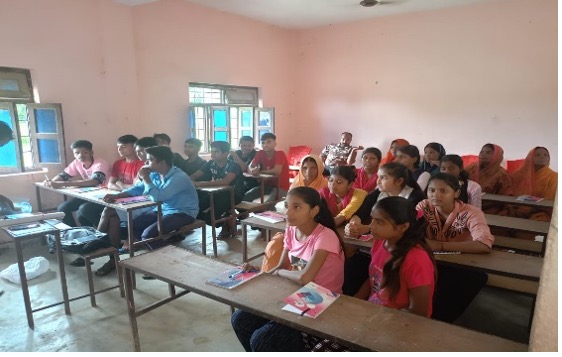
Students, too, played a role. In one consultation meeting, a group of schoolchildren voiced their opinions on how schools could be more engaging and supportive for all students, especially those at risk of dropping out. The result was a policy that reflects the voices of everyone.
Step Five: Finalization and Endorsement
The final step in this community-driven process is presenting the refined draft to the municipal assembly for endorsement. Campaign Nepal’s Executive Director says:
We’re not just fixing today’s problems. We’re laying the groundwork for long-term improvements in educational quality, accessibility, and governance.
The final policy is expected to be endorsed soon, marking the completion of this inspiring journey—a journey led by the people for the people. And while the SMC Network may be a loose forum, it’s one that has proven its capacity to spark lasting change.
Mrs. Das adds with a smile:
This is the future of educational governance. We’re not just waiting for change to happen. We’re making it happen ourselves.
The Bigger Picture: A Success Story
Through this initiative, Campaign Nepal and the SMC Network have shown the power of community-driven policy development. This is more than just a success story for three municipalities—it’s a model that could be replicated across the country, empowering local communities to take control of their educational futures.
As Mayor Yadav sums it up:
With collective ownership of this policy, we are confident that its effective implementation will bring about positive change in the quality, accessibility, and governance of education in our municipality. This is only the beginning.